
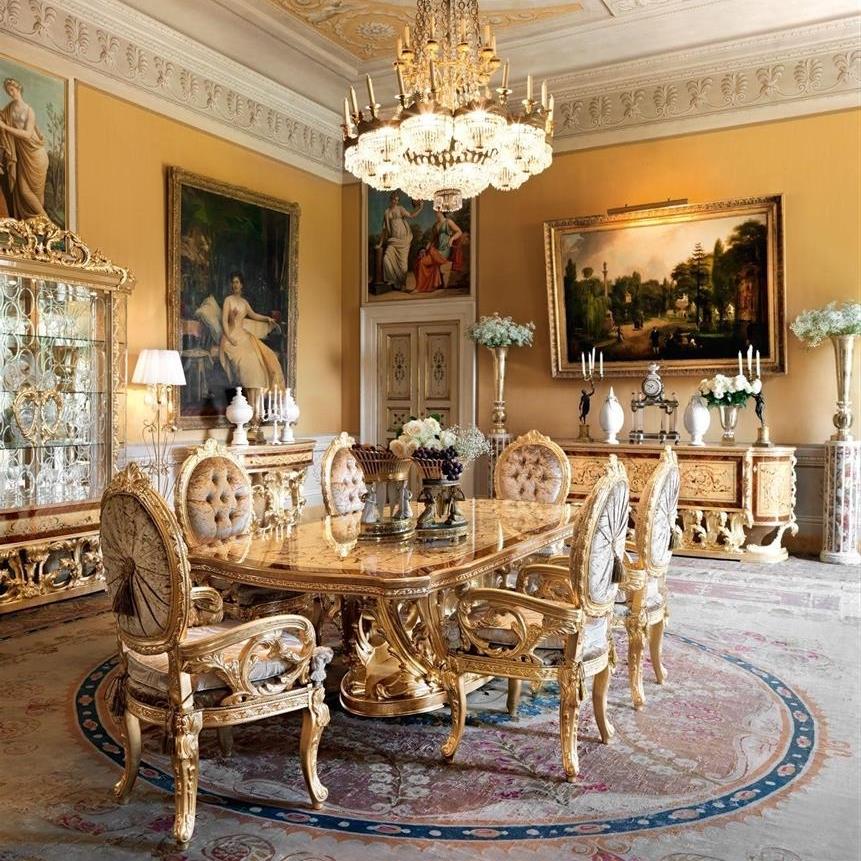
In this article, we will discuss what the Empire style is, its distinctive features, and what products you can create using CNC machines with the help of models available on our website in the Empire style.
About the Empire Style: A Few Historical Facts
The Empire style derives its name from the word "empire."
This style was popular in Europe from the late 18th century to the early 19th century.
It originally emerged in France during the reign of Napoleon Bonaparte and was inspired by ancient Greek and Roman art. The Empire style is characterized by elegance, refinement, and strict forms. Napoleon sought to demonstrate the grandeur and invincibility of France while moving away from the style that dominated before the Revolution.
This style was prominent in architecture, furniture, painting, and decorative arts. It stands out from other styles of the time with its noble and graceful lines, proportions, and details. The Empire style was majestic and luxurious, reflecting the spirit of aristocracy and the power of the emperor. It drew inspiration from themes and ornaments of Ancient Greece and Rome.
New methods of producing furniture and interior items emerged. Craftsmen of that era used wood, marble, bronze, and silk to create exquisite and refined pieces. Many employed complex techniques of carving, casting, and embroidery to give their works special charm and sophistication.
Despite its relatively short existence as a style in art and design history, the Empire style left a significant influence on subsequent periods and styles. Its elegant and refined forms can be seen in various interiors and reproductions of modern furniture. The Empire style remains a monument to an era when art and design reflected the power and status of their owners.
Some of the most striking examples of Empire architecture include the Arc de Triomphe in Paris. A distinct branch of the Empire style, known as Russian Empire, was popular during the reign of Alexander I. Another interesting relative of Napoleonic Empire is the Stalinist Empire style of the 1930s.
Characteristics of the Empire Style in Interior Design
One of the key features of the Empire style in interiors is its luxury and refinement.
The style is distinguished by rich decorative elements, exquisite furniture, and luxurious fabrics.
Empire interiors invariably include elegant cornices, bas-reliefs, columns, ceiling rosettes, pilasters, moldings, and decor—all of which create an atmosphere of opulence and grandeur.
The Empire style also favored classical motifs such as Greek columns, laurel wreaths, tiger heads, and other elements of ancient art. These decorative elements added sophistication and grandeur to the pieces created in this style.
Additionally, the Empire style often incorporates military emblems (armor, weapons).
Another characteristic feature is the use of precious woods such as mahogany, walnut, and Karelian birch for furniture. Empire-style furniture often features curved shapes, intricate carved patterns, and gold ornaments.
One of the incredibly beautiful aspects of the Empire style is the use of silk, velvet, and velvet chiffon for upholstery and window treatments. These fabrics give the interior an aristocratic look and create a special atmosphere of comfort and coziness.
The color palette includes rich shades of red, green, blue, and gold, adding elegance and charm to the space.
The finishing touches in an Empire-style interior can include crystal chandeliers, bronze candlesticks, or portrait paintings in gilded frames.
The goal is to maintain a balance between luxury and refinement, ensuring the interior does not feel overloaded. The Empire style suits those who appreciate classical elegance and comfort in their homes.
Ornaments
Characteristic features of Empire-style ornaments include delicate floral patterns (acanthus, palmettes, lotuses, laurel wreaths, rosettes), floral motifs, garlands, geometric shapes (squares, diamonds, ovals, spirals), military attributes, and ribbons.
The ornaments have a clear structure and are strictly inscribed within squares and circles.
Special attention is paid to details and clean lines, which give Empire-style ornaments a sense of order and discipline (reminiscent of military precision).
Chaotic floral patterns are less common in this style.
Empire-style ornaments can be used to decorate various interior items such as furniture, textiles, tableware, and architectural details of buildings.
Furniture
Empire-style furniture is typically made of natural wood, such as oak, cherry, or walnut.
It often follows an antique style, with a preference for bulky furniture on low legs.
Decor
To create an authentic Empire-style interior, it is essential to consider not only furniture but also decorative elements. Choose textiles with large floral patterns, heavy fabric curtains, and gilded frames for paintings and mirrors. To enhance the atmosphere of luxury and refinement, incorporate elements made of marble, bronze, and crystal.
Thanks to its elegance and sophistication, Empire-style furniture and decor can seamlessly fit into both classical and modern interiors.
Whether it's an apartment, a country house, or an office, Empire-style elements will add luxury and elegance to the room, creating a cozy and stylish atmosphere. When selecting furniture and decor, it is important to consider the specifics of the space and strictly follow stylistic recommendations to achieve harmony and beauty in the interior.
CNC Manufacturing
Modern furniture and decor items can be produced using CNC machines. These machines save time and help achieve high-quality and beautiful decor in the shortest possible time.
Our website offers a wide range of models suitable for creating Empire-style products. Additionally, we are ready to develop custom models upon request.
You Might Also Be Interested in These Articles:
-
Columns and Pillars on CNC. Models.
-
Baroque-Style Interior Products on CNC Machines. Models.
-
Classical Style in Interior Design. Models for Creating CNC Products in the Classical Spirit.